
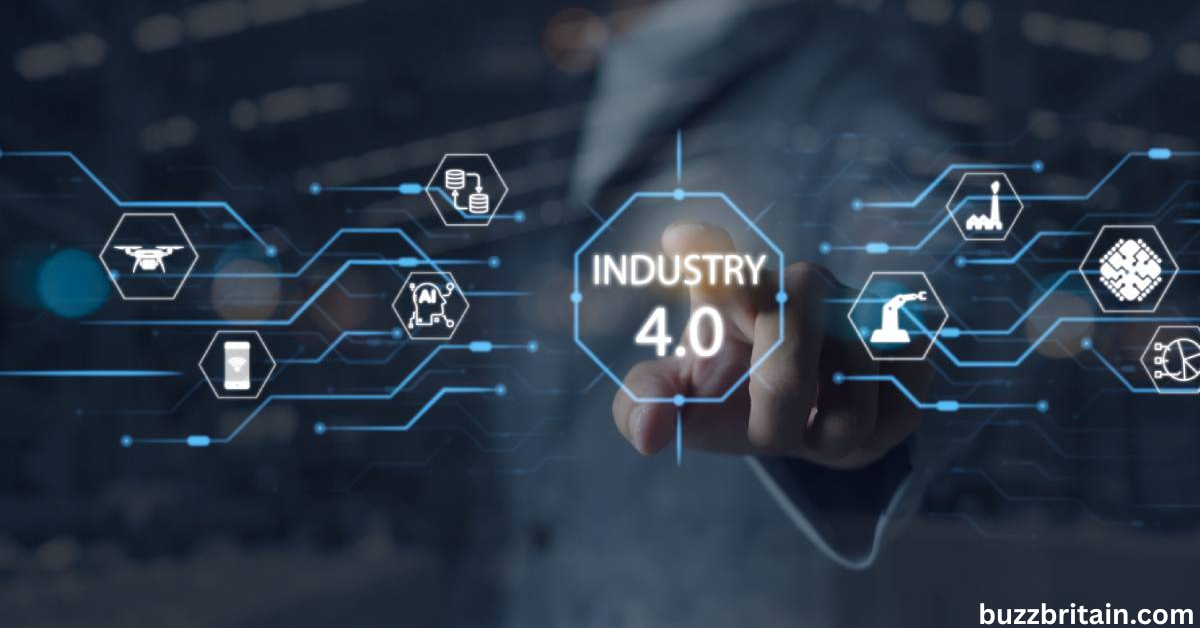
The world of manufacturing is presently processing a seismic shift, transferring past mere automation to shrewd, self-optimizing structures. This variation is called enterprise 4.0, a time period that signifies the fourth important upheaval in business production. It represents the fusion of the bodily and digital worlds through cyber-bodily structures, powered with the aid of a suite of groundbreaking technology. For corporations, know-how and adopting enterprise four.0 is not a futuristic concept but a critical vital for survival, competitiveness, and increase inside the modern international economic system.
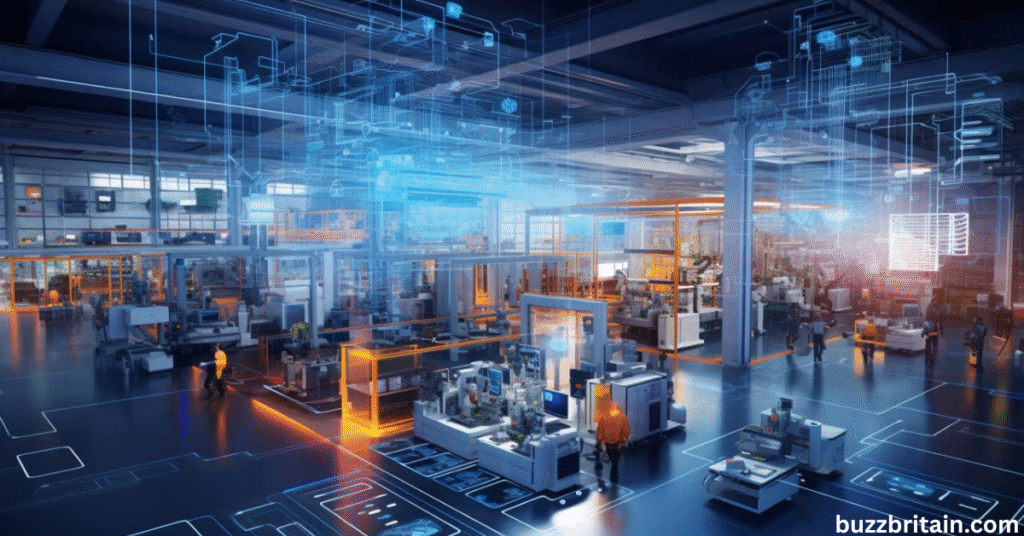
What is enterprise 4.0? Defining the digital industrial Revolution
enterprise 4.0, or the Fourth business Revolution, builds on the digital revolution of the 1/3 revolution. it’s far characterized by a clever, related, and decentralized manufacturing surroundings. In which the 0.33 revolution used electronics and IT for automation, enterprise four.zero leverages the internet of factors (IoT), big information analytics, artificial intelligence (AI), and real-time statistics to create “smart factories.”
The middle idea is to allow machines and structures to speak with each other, examine information, and make selections with minimum human intervention. This creates an extra agile, efficient, and customized production system. It is no longer just about making machines quicker; it’s approximately making the whole cost chain—from providers to customers—greater responsive and shrewd.
The middle Pillars & technologies of industry 4.0
Several interconnected technologies shape the backbone of this revolution. Understanding these pillars is prime to grasping the whole scope of enterprise 4.zero.
1. The internet of factors (IoT) & commercial IoT (IIoT)
IoT refers to a community of physical gadgets embedded with sensors and software, related to the net. In a business context (IIoT), this means machines, robots, and warehouse systems accumulating and sharing operational facts. For example, a sensor on a conveyor belt can reveal its own put on and tear and routinely schedule upkeep, preventing luxurious downtime.

2. huge records & advanced Analytics
clever factories generate giant quantities of records. Massive information analytics techniques this records to discover patterns, correlations, and insights. This allows predictive protection (solving device before it fails), optimizing supply chains, and improving fine control. data turns into the maximum precious asset for strategic choice-making.
3. synthetic Intelligence (AI) & system mastering
AI empowers machines to simulate human intelligence. device mastering, a subset of AI, lets in systems to study from facts and improve over the years without explicit programming. In enterprise four.0, AI is used for:
Excellent assurance: Visually analyzing products for defects with superhuman accuracy.
Manufacturing Optimization: Dynamically adjusting parameters for optimum efficiency.
Demand Forecasting: Predicting market developments to align production schedules.
4. Cyber-bodily systems (CPS) & virtual Twins
This is the heart of enterprise four.zero. CPS are integrations of computation, networking, and physical approaches.A virtual twin is a digital, actual-time virtual replica of a physical asset, gadget, or device. Engineers can use the virtual twin to simulate, screen, and troubleshoot problems in the bodily counterpart, decreasing risks and trying out new mind in a safe digital environment.
The Transformative effect: advantages of Adopting industry 4.0
The implementation of these technologies offers profound advantages throughout the board:
Extraordinary performance & productiveness: computerized, records-pushed procedures limit waste, reduce system idle time, and optimize aid use, substantially boosting output.
More desirable Flexibility & Mass Customization: smart factories can quickly reconfigure production strains to fabricate small batches of customized merchandise fee-effectively, assembly cutting-edge consumer demands.
Advanced first-class & decreased Defects: With actual-time tracking and AI-powered inspection, defects are recognized and addressed right away, leading to superior product pleasantness and less waste.
Predictive protection: moving from reactive to predictive protection saves millions with the aid of warding off unplanned breakdowns and increasing equipment lifespan.
New business fashions & revenue Streams: businesses can shift from selling merchandise to imparting “Product-as-a-provider,” the usage of data to offer ongoing fees and create new purchaser relationships.
Navigating the demanding situations: The Roadblocks to Implementation
no matter its promise, the route to enterprise four.0 is fraught with demanding situations that businesses need to navigate:
Excessive preliminary funding & ROI Uncertainty: Upgrading legacy structures and enforcing new technology calls for large capital, with a every so often doubtful go back on funding timeline.
Cybersecurity & data privacy dangers: A quite linked factory is greater liable to cyber-assaults. defensive important business networks and sensitive statistics is paramount.
Competencies gap & body of workers Transformation: The need for brand new competencies—like statistics technological know-how, AI programming, and IoT control—creates a talent scarcity. Upskilling the prevailing team of workers is a primary hurdle.
Integration Complexity & Interoperability: ageing and new structures from extraordinary carriers to speak seamlessly is a complex technical assignment.
Industry four.zero in action: real-global packages
Siemens’ Amberg Electronics Plant: This particularly automatic manufacturing unit, where merchandise manipulate their own production procedure, achieves a ninety nine.99885% first-rate price, showcasing near-0 illness production.
Haier’s “Internet of Factories”: The appliance largely uses a platform that connects users, designers, and suppliers without delay to its manufacturing strains, enabling authentic mass customization of products like fridges.
John Deere’s smart Farming: Their equipment uses IoT and AI to offer farmers with real-time facts on soil conditions, crop fitness, and equipment performance, optimizing yields and aid use.
FAQs: Answering Your Key Questions
Q: What’s the main goal of industry 4.0?
A: The number one goal is to create smart, self-reliant, and green production ecosystems that leverage real-time facts and connectivity to enhance productiveness, enable customization, and force innovation.
Q: How does enterprise 4.zero affect jobs? Will it motivate unemployment?
A: At the same time as it’ll automate many habitual and guide responsibilities, enterprise 4.zero is predicted to create extra jobs than it displaces. Those new roles could be extra professional, focusing on facts evaluation, machine management, AI oversight, and tech renovation. The secret is proactive personnel reskilling and education.
Q: Is enterprise 4.zero most effective for large production organizations?
A: Really now not. At the same time as huge firms are early adopters, scalable cloud-based answers and “as-a-carrier” models are making middle industry four.0 technologies like information analytics and AI reachable and inexpensive for small and medium-sized enterprises (SMEs).
Q: What’s the difference between industry four.0 and clever manufacturing?
A: The terms are often used interchangeably. However, smart production is commonly seen as the operational, technology-driven method within a manufacturing unit, while industry 4.zero is the wider, strategic concept encompassing the entire value chain and atmosphere.
End: The destiny is hooked up and smart
Industry 4.zero is not a distant fashion; it’s far the defining reality of present day enterprise. It represents an essential shift from centralized, linear manufacturing to a dynamic, intelligent, and interconnected network. The combination of IoT, AI, huge records, and robotics is unlocking ranges of efficiency, customization, and innovation previously unimaginable. While challenges like cybersecurity and capabilities gaps are real, the advantages of embracing this virtual transformation are undeniable. Groups that proactively put money into know-how and imposing enterprise 4.0 concepts these days might be the market leaders and innovators of the next day.
